
The Fire in Her Eyes: Sekhmet in Ancient Egyptian Art
5 min reading time
5 min reading time
I still remember the first time I saw her. A statue in a museum. This lion-headed woman staring back at me. Something about her face made me stop walking.
Sekhmet scared the ancient Egyptians. But they also loved her. I find that strange. How can you worship something that terrifies you?
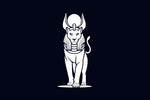
The Egyptians carved Sekhmet with a lion's head on a woman's body. They didn't make her look friendly. Her face shows power. Raw strength. The kind that makes your heart beat faster.
Artists gave her a solar disk on her head. A cobra wrapped around it. The sun sat right there above her mane. This told everyone she came from Ra, the sun god. She was his daughter. His weapon.
Most statues show her sitting down. She holds an ankh in one hand. That's the Egyptian symbol for life. Strange, right? The goddess of war holds the sign of life.
Her body stays human. Female. Strong but graceful. The Egyptians were careful about this mix. Half human, half lion. All dangerous.
Lions lived in Egypt back then. Real ones. They hunted in the desert. People saw them kill. Saw them protect their cubs. Saw them rule their territory.
The Egyptians picked the perfect animal for Sekhmet. Lions meant power. They meant protection. They meant death when you made them angry.
Female lions do most of the hunting. Maybe that's why Sekhmet is female. The real killers in a pride. The ones who bring down prey.
I think about this a lot. How the Egyptians watched nature. Then turned it into art. Into meaning.
When artists painted Sekhmet, they used specific colors. Red showed up often. Red for blood. Red for anger. Red for the desert heat.
Gold appeared too. Lots of gold. She was royalty. Divine. Worth more than anything humans could own.
Some statues were made from black granite. Dark and smooth. The stone came from far away. It cost money to move. This wasn't cheap art.
The black made her look even more serious. More final. Like a judgment you can't appeal.
Pharaoh Amenhotep III made hundreds of Sekhmet statues. Maybe even a thousand. Scholars still count them. Museums around the world have pieces.
Why so many? Some say he was sick. He wanted to calm her anger. Each statue was a prayer. A plea. "Please don't hurt me."
Others think he just loved her power. Wanted to show his connection to her strength. Wanted everyone to see: I have the goddess of war on my side.
Walking through a museum with twenty Sekhmet statues feels overwhelming. Imagine a temple with hundreds. The weight of all those eyes. All that stone fury watching you.
Artists didn't just make pretty statues. They told stories through their work.
Ra sent Sekhmet to punish humans once. People stopped respecting the gods. So she went down to Earth. Started killing everyone.
She enjoyed it too much. Couldn't stop. Ra had to trick her. He poured out beer mixed with red dye. It looked like blood. Sekhmet drank it all. Got drunk. Fell asleep. The killing stopped.
Artists showed this story in temple walls. Sekhmet drinking. Sekhmet sleeping. Sekhmet satisfied.
The Egyptians understood something deep here. Anger needs to be fed. Or tricked. Or put to sleep. You can't just make it disappear.
Look close at the statues. Really close. You'll see details.
The way her ears point back. Alert. Always listening. The curve of her muzzle. The lines around her eyes. Each artist made choices.
Some gave her a slight smile. Others made her look completely blank. No emotion at all. Which is scarier? I'm not sure.
The pleats in her dress. The way her hands rest. The shape of her feet. Nothing was random. Every part meant something.
Egyptian art followed rules. Strict ones. But artists still found ways to add their own touch. A small difference in the eyes. A unique curve to the mouth.
Temples put Sekhmet statues at entrances. She guarded the space. Kept evil out. This goddess of destruction became a protector.
That switch makes sense to me now. The same strength that destroys can also defend. Fire burns enemies. But it also keeps you warm.
Soldiers wore her image. Carried amulets. Asked for her help in battle. They wanted her rage on their side.
Doctors called on her too. She sent plagues. So maybe she could stop them. Fight disease with disease. Fight death with the bringer of death.
Most Sekhmet art stayed in Egypt. But time wasn't kind. Earthquakes damaged temples. Thieves stole statues. Sand buried everything.
What survived ended up scattered. London. New York. Paris. Berlin. Pieces of her everywhere. Never together.
I wonder what it felt like. Standing in her temple. Seeing all those statues at once. Feeling that energy. That concentrated power.
We have photographs now. Books. Museum displays. But we lost the full experience. The context. The overwhelming presence.
Modern people still make Sekhmet art. She appears in paintings. Sculptures. Digital work. The lion-headed goddess lives on.
Something about her speaks to us. Maybe we understand anger better now. Or maybe we always did. The Egyptians just showed it honestly.
She represents the parts of ourselves we fear. The rage we try to hide. The power we're not sure we can control.
But she's also beautiful. Strong. Protective. All those things exist together. The Egyptians knew that. Put it in stone. Left it for us to find.
Every Sekhmet statue I see now feels personal. Like she's asking me something. Can you handle real power? Can you respect what destroys and creates?
I don't have good answers. But I keep looking at her art. Keep thinking about those ancient artists. Keep wondering what they knew that we forgot.


$29.99


$44.99 - $49.99


$24.99 - $29.99


$44.99 - $49.99