
The Octagram: Eight Points of Wonder in Art and Icons
4 min reading time
4 min reading time
I still remember the first time I saw an octagram. It was carved into the door of an old building. Eight perfect points reaching out like a star. I stood there, stuck, trying to figure out why it pulled me in so hard.
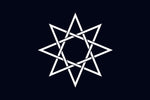
The octagram is an eight-pointed star. You make it by placing two squares on top of each other. Turn one square 45 degrees. That's it. Simple math creates something that feels almost magic.
But here's what gets me. This shape shows up everywhere. Different times. Different places. People who never met each other all drew the same star.
Walk into a mosque and look up. You'll find octagrams woven into the tiles. Islamic artists loved this shape. They saw it as a path between the earth and heaven. Eight points reaching toward something bigger.
The number eight meant rebirth to them. It stood for the throne of God. When they covered walls and ceilings with these stars, they weren't just making pretty patterns. They were building prayer in geometric form.
Christians used it too. Sometimes I wonder if they knew how much they shared with Islamic art. The octagram became a symbol for new life. For Christ rising from death. Eight sides on a baptism font. Eight points on a star above an altar.
The shape carries weight without words.
Here's where my brain always trips up. Why eight? Why not seven or nine?
Eight sits right between the stable square and the forever circle. It's movement frozen in form. Balance that feels active, not stuck.
Ancient builders knew this in their bones. They made octagon towers. Eight-sided domes. The number felt right in ways they couldn't always explain.
I think about this when I'm drawing. Some shapes just work. The octagram works because it holds opposites together. Order and chaos. Still and moving. Grounded and reaching.
The Babylonians carved octagrams into clay tablets. For them, it marked the goddess Ishtar. Star of morning and evening. Light in darkness.
Skip ahead thousands of years. Different continent. The Lakota people used eight-pointed stars in their crafts. It meant the four winds and four directions. Plus the four seasons. Everything that makes up a whole life.
Same shape. Different meaning. But always important. Always sacred.
This pattern repeats across the world. Japan. India. Europe. Africa. The octagram appears in temples, on flags, in jewelry. Each culture adds its own story to those eight points.
Medieval artists couldn't get enough of octagrams. Open an old book from that time. You'll find them in the margins. On title pages. Framing text like windows.
They used the star to mark important moments. Birth. Death. Vision. Change.
I love how simple they kept it. Just eight lines meeting at angles. No extra decoration needed. The shape did the talking.
Renaissance painters got fancier. They hid octagrams in their work. Look close at the floor tiles in a painting. Check the design on a robe. The eight-pointed star sneaks in. A little nod to older wisdom.
Fast forward to now. The octagram still shows up. Sometimes people don't even know what they're using.
Company logos. App icons. Street signs. That eight-pointed star keeps appearing. We're drawn to it without quite knowing why.
I see it in video games. In sci-fi movies. In new age stores and old churches. The shape refuses to fade away.
Maybe it's because octagrams feel complete. They're complex enough to interest the eye. But clear enough to read fast. Your brain likes that combo.
Want to make one? It's easier than you think. But also harder than it looks.
Start with a square. Draw another square over it. Turn the second one partway. Keep going until you have eight points.
The tricky part is getting the angles right. Too sharp and it looks wrong. Too flat and it falls apart. There's a sweet spot where everything clicks.
I've drawn hundreds of these. Each one teaches me something new about balance. About how small changes shift the whole feel.
This shape keeps showing up because it says something true. Something about how things connect. How the sacred and the normal live next to each other.
Eight points reaching out from one center. It's a map of how ideas spread. How influence moves. How one thing becomes many while staying whole.
When I look at an octagram now, I see all those old artists. The Islamic tile makers. The Christian monks. The Babylonian priests. All of them drawing the same star. All of them trying to catch something real in geometric form.
They were onto something. That star still catches light. Still pulls the eye. Still makes you stop and wonder.
The octagram isn't just a pretty shape. It's a language that jumps across time. A symbol that different people use to point at similar truths. Mystery. Balance. The dance between earth and everything beyond it.
I'm still learning to read that language. Still finding new octagrams hiding in plain sight. And every time I do, I feel that same pull. That same sense of recognition.
Eight points. Infinite meaning.


$29.99


$44.99 - $49.99


$24.99 - $29.99


$44.99 - $49.99