
The Sun God Ra: How Ancient Egypt Painted Their Most Important Deity
5 min reading time
5 min reading time
I've always been drawn to Egyptian art. Something about those bold colors and strange poses keeps pulling me back. And when you start looking at Ra, the sun god, you see him everywhere. The ancient Egyptians painted him on tomb walls, carved him in stone, and drew him in books meant to guide the dead. He shows up so often that you can't help but wonder: why did they paint him this way?
Ra wasn't just any god. He was the sun itself. Each morning, he sailed across the sky in a boat. Each night, he traveled through the underworld. The Egyptians believed he created himself from chaos. That's a big deal. Most gods had parents or origin stories, but Ra? He simply was.
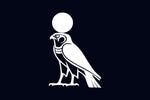
Artists painted Ra with a human body and a falcon head most of the time. On top of that falcon head sits a bright red sun disk. Sometimes a cobra wraps around the disk. The cobra represents protection and royal power.
But here's what gets me. Not every picture shows Ra the same way. Sometimes he appears as a full falcon. Other times he's a man with a ram's head. In some paintings, he's a beetle pushing the sun across the sky. The variety makes sense once you understand their thinking. Ra took different forms at different times of day.
Morning Ra was Khepri, the beetle. Midday Ra was Ra-Horakhty, the falcon. Evening Ra was Atum, shown as an old man. The Egyptians saw the sun's journey as a life cycle. Young at dawn, strong at noon, old at dusk. They painted what they believed.
The colors in Egyptian art weren't random. Each one carried meaning. When artists painted Ra, they used specific shades on purpose.
Gold covered Ra's skin in many paintings. Gold meant eternal life. It didn't tarnish or fade. The sun was golden, so Ra was golden. Simple connection, but powerful.
Red showed up constantly. The sun disk, the desert, even Ra's eyes sometimes glowed red. Red meant life and energy. It also meant danger and chaos. The Egyptians understood that the sun gives life but can also destroy. Those red tones capture both sides.
Blue appeared in the background. Blue represented the sky and water, the two realms Ra traveled through. Deep blue or light blue, it framed the god in his natural home.
White and black created contrast. White symbolized purity and bright light. Black wasn't evil to them. It meant fertile soil and rebirth. The underworld where Ra traveled each night was dark but necessary.
You can't talk about Ra in art without mentioning his boat. The solar boat appears in countless paintings and carvings. Sometimes it's simple. Other times it's packed with other gods and symbols.
Ra stands in the middle, holding a staff. Other gods row or protect him. At night, a giant serpent named Apophis tries to stop the boat. Artists painted epic battles between Ra and this chaos snake. The snake is huge, coiled and threatening. Ra fights it off with magic and the help of other gods.
These boat scenes tell a story. They show that even the most powerful god faces challenges. Every night brings a battle. Every morning brings victory. The Egyptians found comfort in this cycle. If Ra could defeat chaos every single night, life would continue.
Look closely at paintings of Ra. He almost always holds two items. In one hand, a staff. In the other, an ankh.
The staff shows authority. Gods and pharaohs carried them. The curved top represents power over the land and people. When Ra holds this staff, the message is clear: he rules.
The ankh looks like a cross with a loop on top. It means life. Ra literally holds life in his hand. He gives life through sunlight. Crops grow, people survive, the world keeps going. The ankh makes this visual.
These objects weren't decoration. They were part of who Ra was. Artists included them to show his nature and his role.
The best Ra art appears in temples and tombs. At Karnak, massive columns show Ra in different forms. The walls of the Valley of the Kings contain detailed scenes of his nightly journey.
Walking through these spaces must have felt overwhelming. Imagine being an ancient Egyptian, looking up at these painted gods. The ceiling represents the sky. Ra sails overhead. You stand in his world.
Artists painted Ra larger than other figures. Size showed importance. When Ra appears with humans, he towers over them. When he's with other gods, he's still often the biggest. This wasn't ego. It was hierarchy made visible.
What strikes me most is the care in each painting. These weren't rushed jobs. Artists mixed their own paints from minerals and plants. They sketched guidelines on walls. They filled in colors layer by layer. Each Ra painting took time and skill.
They believed these images had power. A painted Ra wasn't just a picture. It was a presence. It could protect the dead, bless the living, and maintain order in the universe. That's why they got the details right. The falcon head had to look just so. The sun disk needed the perfect curve. The colors had to be exact.
Egyptian art of Ra teaches us how people made sense of nature. They saw the sun rise and set. They needed to explain it. So they created stories and gave those stories form.
Ra in Egyptian art shows us their values too. Order over chaos. Life through struggle. The cycle that never ends. These paintings and carvings lasted thousands of years. We can still see them, study them, and feel connected to people who lived so long ago.
Every time I see Ra painted on a tomb wall or carved in a temple, I think about the artist. Someone mixed that paint. Someone climbed that scaffold. Someone believed this work mattered enough to do it right. And they were correct. It did matter. It still does.


$29.99


$44.99 - $49.99


$24.99 - $29.99


$44.99 - $49.99